


Blog
Stiff Knees After Sitting or in the Morning: Why It Happens and What Helps

Nov
MEBy MONKIKA EL, founder of MONKIKA · Updated November 2026 · 7 min read
The short answer
Stiff knees after sitting or first thing in the morning are very common, especially after 45. Joints stiffen when they stay still, and the stiffness usually eases after a few minutes of moving. Morning stiffness that lasts 30 minutes or less, with knee pain that gets worse with activity, is typical of osteoarthritis, which UK guidelines say doctors can diagnose without an X-ray in adults aged 45 and over. Stiffness that lasts an hour or more, a swollen or warm knee, or stiffness after an injury deserve a doctor’s visit. Moving often, strengthening the thigh muscles and warmth help most people feel looser.
You stand up after a film or a long drive and the first steps feel like your knees forgot how to bend. Or you get out of bed and the stairs take a minute. Stiff knees are one of the most common complaints after fifty, and most of the time the answer is movement, not rest. Here is what is normal, what helps, and what is worth checking.
Why are my knees so stiff after sitting?
- Staying still. Joints like movement. After a long sit or a night in bed, the knee needs a few steps to loosen up again.
- Wear of the joint with age (osteoarthritis). The most common reason knees feel stiff after rest and in the morning in people over 45.
- Inflammation. In inflammatory arthritis, such as rheumatoid arthritis, stiffness is often worst on waking and after long rest, and takes an hour or longer to ease.
- Standing in one position for hours can also leave knees stiff and achy by evening.
- An injury or swelling after a fall, a twist or a sport.
Stiff knees: how long it lasts and what it may mean
| Stiffness | What it often means | What to do |
|---|---|---|
| A few minutes after sitting, eases as you walk | Normal stiffness after rest, often osteoarthritis | Move often, strengthen, warm up |
| Morning stiffness of 30 minutes or less, pain with activity | Typical of osteoarthritis after 45 | Talk to your doctor about a plan |
| Morning stiffness of an hour or more, several joints | Possible inflammatory arthritis | See a doctor |
| Swollen, warm or red knee, or after an injury | Possible inflammation, infection or injury | See a doctor promptly |
Sources: UK guidelines describe osteoarthritis in adults 45 and over as activity-related joint pain with morning stiffness of 30 minutes or less (NICE). The MSD Manual explains that inflammatory stiffness is usually worse on waking or after long rest and eases with activity after an hour or longer, and that stiffness lasting less than 15 minutes is probably not from inflammation (MSD Manual).
What helps stiff knees
- Get up every half hour or so when you sit for long, even for a minute.
- Warm up before you stand: straighten and bend each knee ten times, and pump your ankles, while still seated.
- Keep moving every day: walking, cycling or swimming at a comfortable pace.
- Strengthen the thigh muscles that support the knee. A physical therapist can show you safe exercises.
- Wear supportive shoes, and keep a healthy weight to take load off the knees.
- Use warmth before activity if it makes you feel looser (see below).

From our shop
18 knee ebooks, including home exercise programs, plus 5 bonus tools. Instant download.
kr.280.37See the knee ebooks
Warmth and stiff knees
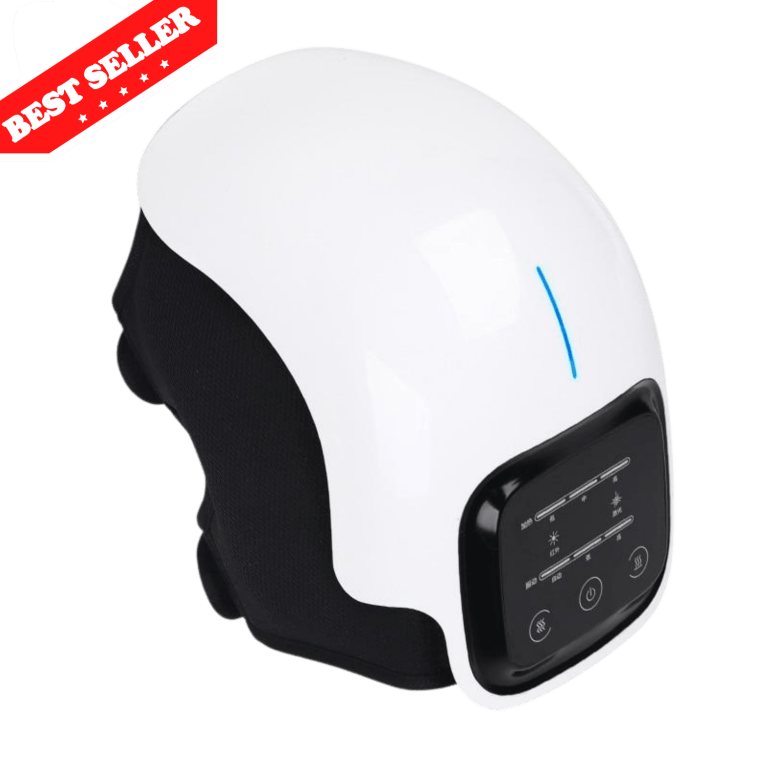
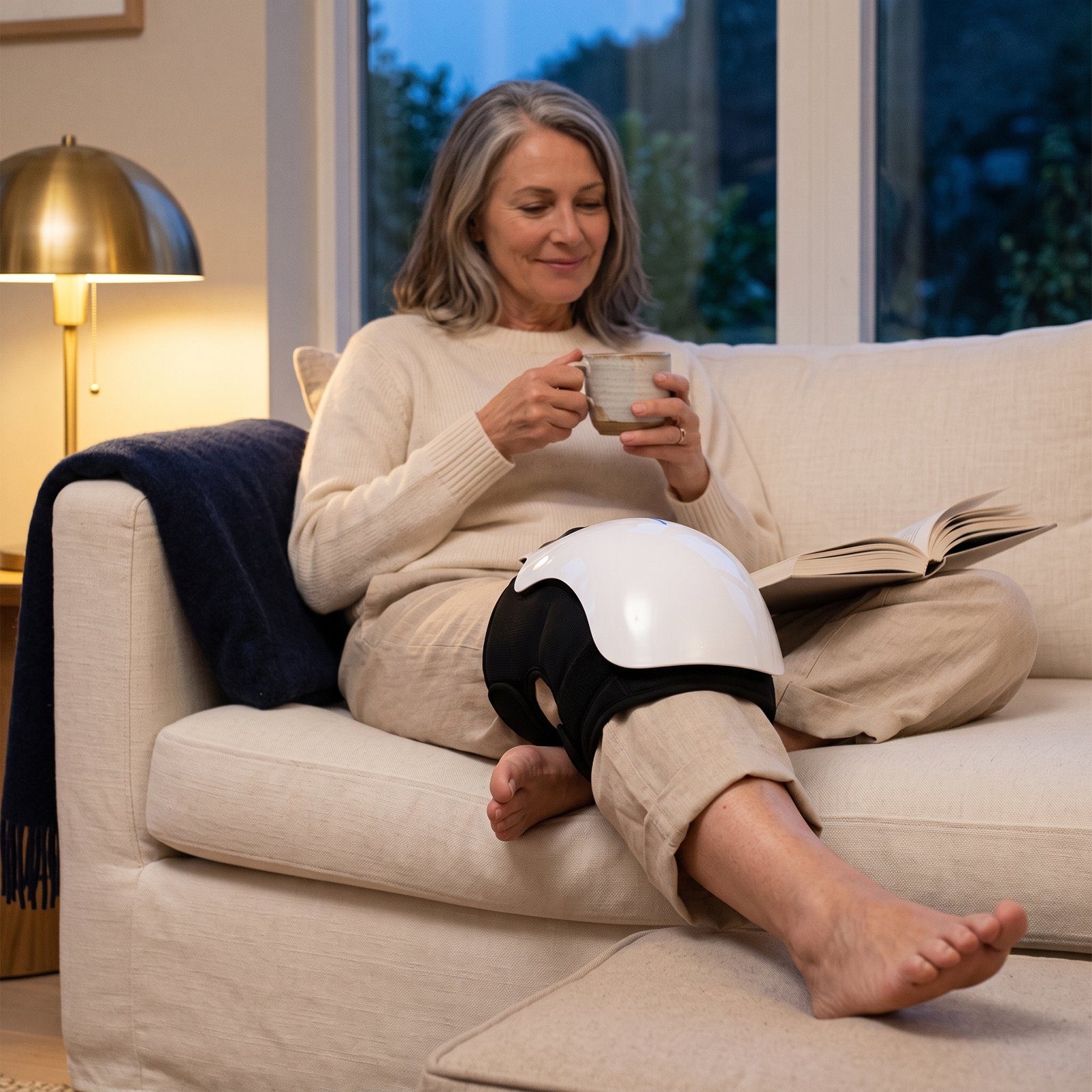
Many people find that warmth helps a stiff knee feel looser before a walk or after a long day. That is what our MONKIKA Knee Massager is for: ten minutes of heat, air compression, vibration and red light, then it switches itself off. It is a comfort device, not a treatment for arthritis; we look at the evidence honestly in do knee massagers work? and compare it with a simple heating pad in knee massager vs heating pad. For support during the day, there is our knee compression sleeve.
From our shop
Heat, air compression, vibration and red light in one cordless wrap. Ten-minute sessions that switch off by themselves.
kr.842.09See the knee massager
When to see a doctor about stiff knees
Questions
Joints stiffen when they stay still, and the knee needs a few steps to loosen up. In people over 45, wear of the joint (osteoarthritis) is a common reason. Stiffness that lasts more than half an hour, or swelling, deserves a check.
Before you stand, straighten and bend each knee ten times, then walk slowly for a minute or two. Warmth before activity also helps many people feel looser.
They can be. Morning stiffness of 30 minutes or less with pain that gets worse with activity is typical of osteoarthritis after 45. Stiffness of an hour or more, or several swollen joints, can point to inflammatory arthritis. Your doctor can tell the difference.
A sudden stiff knee often follows an injury, a twist or swelling. See a doctor if it is swollen, warm, locks, gives way or follows a fall.
Many people find warmth makes a stiff knee feel looser, especially before moving. Avoid heat on a knee that is hot and swollen, and keep sessions short.
Gentle, regular movement such as walking, cycling or swimming, plus strengthening of the thigh muscles. A physical therapist can tailor a program to your knees.
Ten warm minutes before the stairs.
The MONKIKA Knee Massager: heat, air compression, vibration and red light, kr.842.09, with a 60-day home trial.
This guide is for general information. It is not medical advice. MONKIKA products are wellness devices for comfort and relaxation, not medical devices, and are not intended to diagnose, treat, cure or prevent any disease. If you have a medical condition, recent injury or surgery, ask a healthcare professional before using heat, cold, compression or massage.

