


Blog
Do Knee Massagers Work? What They Do, and What They Don’t

Nov
YEBy MONKIKA EL, founder of MONKIKA · Updated November 2026 · 8 min read
The short answer
Do knee massagers work? They do what the box says: they warm the joint, squeeze it in a slow rhythm and add vibration, and many people find that relaxing and comforting for a while afterwards. They do not repair cartilage, cure arthritis or replace exercise. There is very little research on knee massager devices themselves. The research is on their ingredients, mainly heat, and it shows small benefits at best.
We sell a knee massager, so read this with that in mind. We would still rather you buy one for the right reasons than send it back disappointed.
What a knee massager is
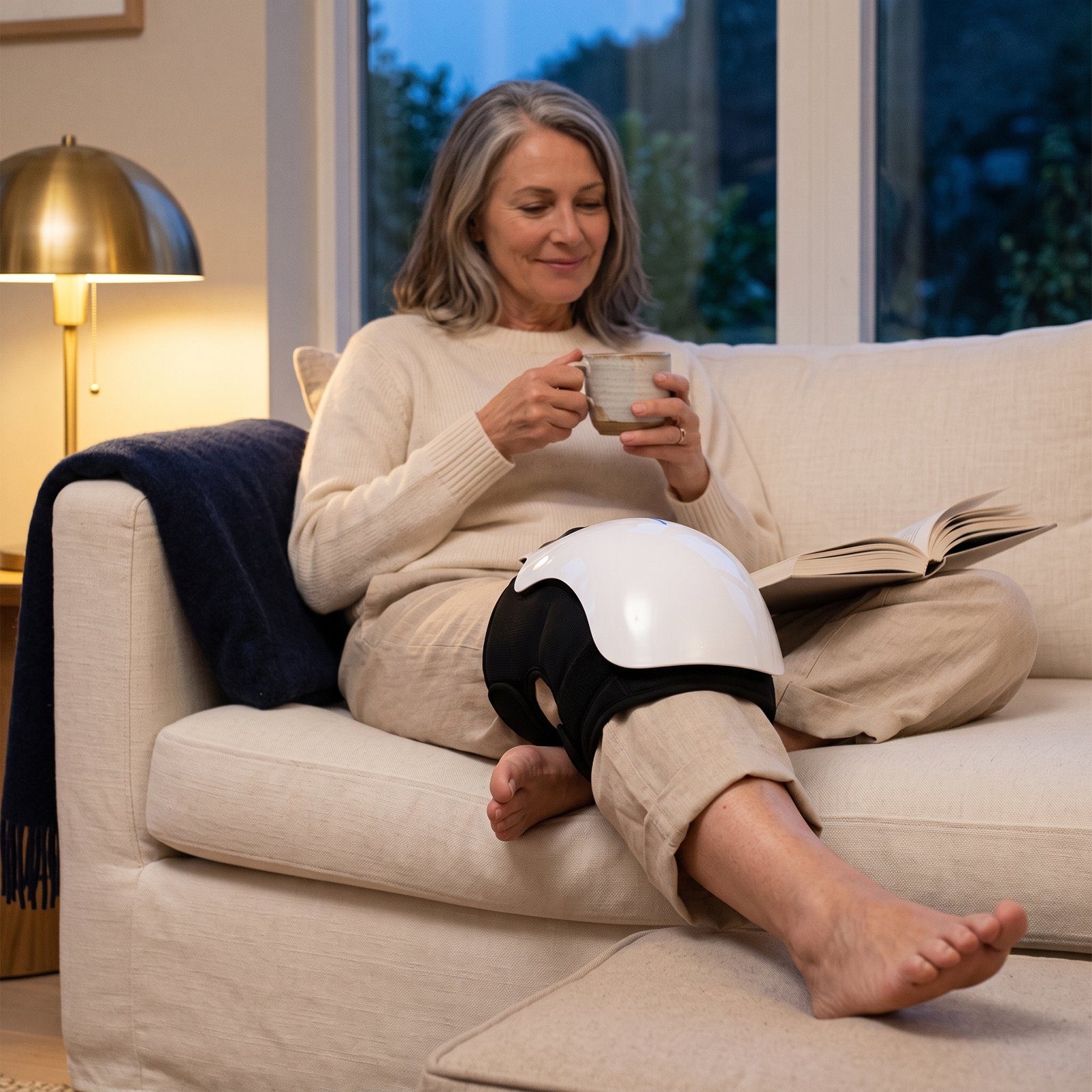
A knee massager is a wrap that closes around the knee and combines some or all of these:
- Heat from a heating film, usually in two or three levels.
- Air compression: small airbags that fill and release, which feels like a slow kneading.
- Vibration from a small motor.
- Red light on some models, which mostly adds a warm glow.
Most run on a rechargeable battery and switch themselves off after 10 to 15 minutes.
What the research says, ingredient by ingredient
We could not find good clinical trials on consumer knee massagers as a whole. Here is what exists for each part:
| Ingredient | What the evidence says | Our reading |
|---|---|---|
| Heat | The American College of Rheumatology and Arthritis Foundation guideline conditionally recommends thermal interventions for knee osteoarthritis, for small improvements in pain and function (AAFP summary). | The best-supported part of a knee massager |
| Cold | A Cochrane review found only three small trials: ice massage improved range of motion and strength a little, cold packs reduced swelling, and the authors say firm conclusions cannot be made (Cochrane). | Useful for swelling; most knee massagers don’t cool |
| Hands-on manual therapy | The same guideline conditionally recommends against manual therapy for knee osteoarthritis, which it found gives little relief (AAFP summary). | Don’t expect a device to do what therapy doesn’t |
| Air compression and vibration | Very little research on small devices used on the knee at home. | Pleasant and relaxing; we make no health claims for them |
| Red light | Studies on light therapy exist, but results are mixed and the devices differ widely. | Treat it as a warm glow, not a treatment |
| Exercise | The guideline lists exercise as a first-line approach for knee osteoarthritis (AAFP summary). | Still the thing that matters most |
So, do knee massagers work for comfort?
The experience is easy to describe: warmth spreading through a cold, stiff joint, a looser feeling when they stand up, and ten quiet minutes that become a habit. That feeling is real, and for many people it is reason enough. It also fades after a while, which is why most people use one once or twice a day.
What a knee massager can’t do
- Rebuild cartilage or reverse arthritis.
- Heal a torn ligament or meniscus.
- Replace the exercise, weight management or physical therapy your doctor recommends.
- Fix the cause of new, sharp or unexplained knee pain. That needs a diagnosis.
Who it suits, and who should ask first
It suits people who like warmth on a stiff knee at the end of the day, people on their feet all day, and active people who want a warm-up or wind-down ritual.
If you decide to buy one
Look for adjustable heat with overheating protection, an automatic shut-off, a strap that fits snugly without pinching, a battery that lasts a few sessions, and a return window long enough to judge it. We compare the options in air compression vs vibration and knee massager vs heating pad, and explain session length in how long to use a knee massager.
From our shop
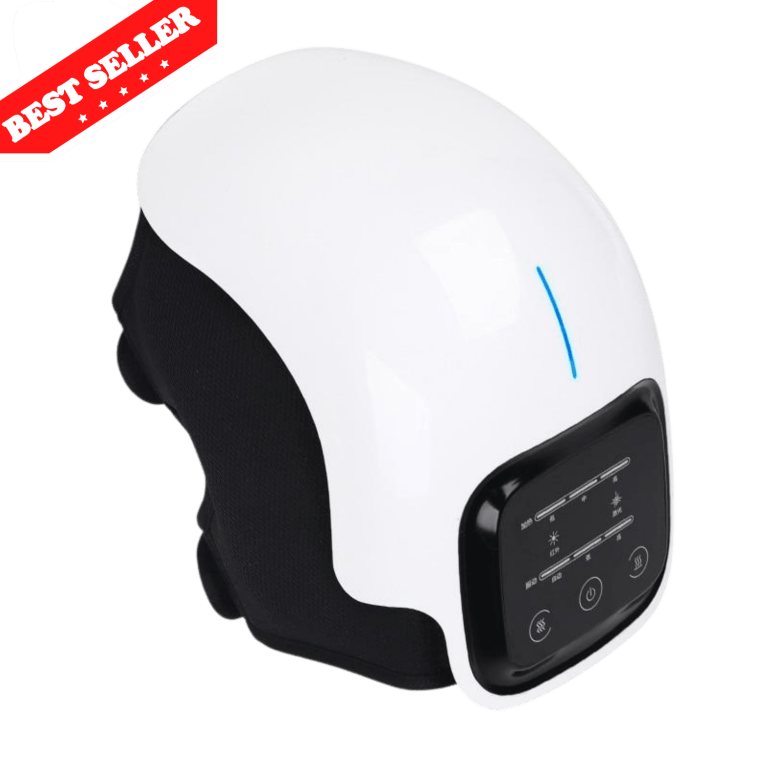
Heat (about 105, 120 and 140°F), air compression, vibration and red light, ten-minute sessions, cordless. 60 days to try it at home, and if it does nothing for you, send it back.
$119.99See the knee massager
Questions
They are not a treatment for arthritis. Heat, the main thing a knee massager provides, is conditionally recommended in the American College of Rheumatology guideline for small improvements in knee osteoarthritis pain and function. Many people find the warmth comforting; ask your doctor whether it suits you.
It can if the heat or pressure is too strong, or if the knee is freshly injured or swollen. Start on the lowest settings, stop if anything hurts or your skin turns very red, and see a doctor for new or sharp pain.
They are worth it if you enjoy warmth and massage and will use one regularly. If you only want warmth, a heating pad is cheaper. A long return window lets you find out at home.
Doctors generally recommend exercise first for knee osteoarthritis, and many are happy for patients to use heat for comfort. Few would recommend a specific device. Ask yours.
Yes, most people use one once or twice a day for 10 to 15 minutes. See our guide on how long to use a knee massager.
Try it for 60 evenings
If it hasn’t earned its place by the sofa, send it back.
Sources
This guide is for general information. It is not medical advice. MONKIKA products are wellness devices for comfort and relaxation, not medical devices, and are not intended to diagnose, treat, cure or prevent any disease. If you have a medical condition, recent injury or surgery, ask a healthcare professional before using heat, cold, compression or massage.

