


Blog
Knee Massager vs Heating Pad: Which One Should You Buy?
Nov
YEBy MONKIKA EL, founder of MONKIKA · Updated November 2026 · 6 min read
The short answer
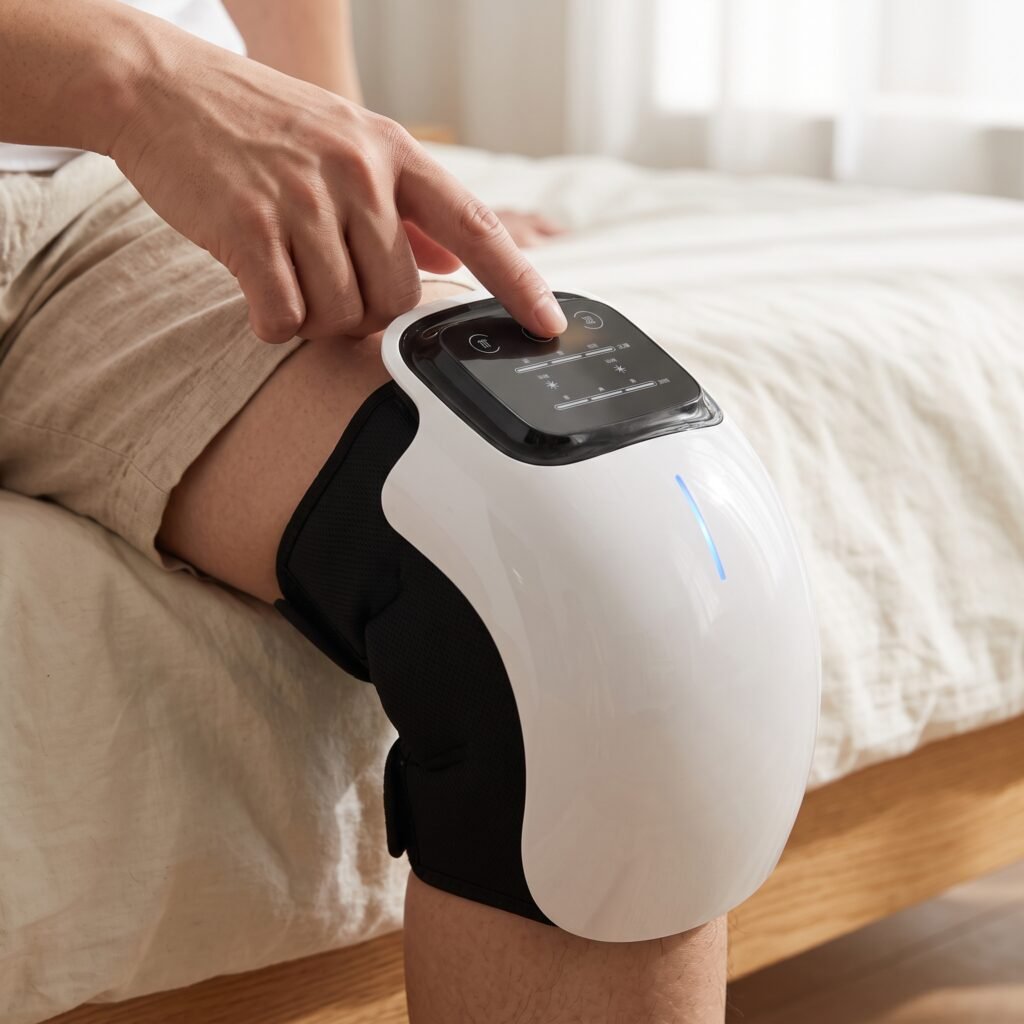
Knee massager vs heating pad, in one line each: a heating pad gives you warmth and nothing else. It is cheap, covers a big area and usually needs a socket. A knee massager wraps the joint and combines heat with air compression and vibration, runs on a battery and switches itself off. If warmth is all you want, a heating pad is enough. If you want the massage feel and a cordless, ten-minute routine, a knee massager is the upgrade.
Knee massager vs heating pad, side by side
| Heating pad | Knee massager | |
|---|---|---|
| What it does | Warmth | Warmth, air compression, vibration, sometimes red light |
| Fit on the knee | Lies on top or wraps loosely | Closes snugly around the whole joint |
| Power | Usually a wall socket | Usually a rechargeable battery |
| Automatic shut-off | On many models, after 30 minutes to 2 hours | Usually after 10 to 15 minutes |
| Other joints | Back, neck, belly, anywhere | Knee, and on some models elbow and shoulder |
| Typical price | About $20 to $60 | About $60 to $200, premium models more |
| Best for | Warmth on a budget, large areas | A cordless massage routine for the knee |
When a heating pad is enough
If what you want is warmth on a stiff knee while you read or watch TV, a heating pad does the job for little money, and you can use it on your back too. Some people prefer moist heat, from a microwavable pack or a warm damp towel, which a pad can’t give.
When a knee massager is worth it
- You want the massage, not just the heat. Air compression around the joint feels like a slow, kneading squeeze that a flat pad can’t do.
- You want to move. A cordless wrap goes from the sofa to the desk to the bed, without a cable across the room.
- You want a routine. A ten-minute session that switches itself off is easier to keep than a pad you have to remember to turn off.
- Both knees, or the knee and the elbow. An adjustable strap fits different joints.
From our shop
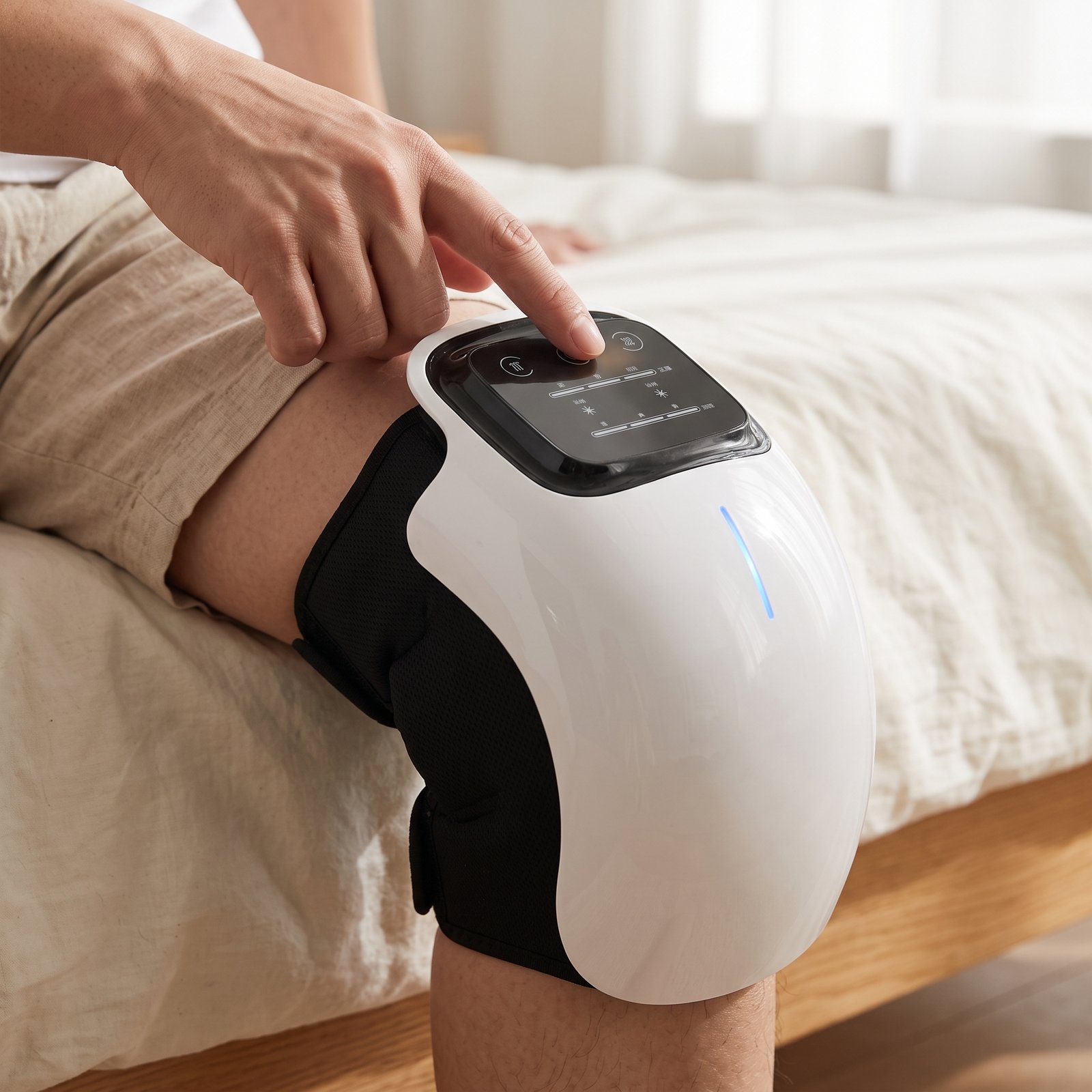
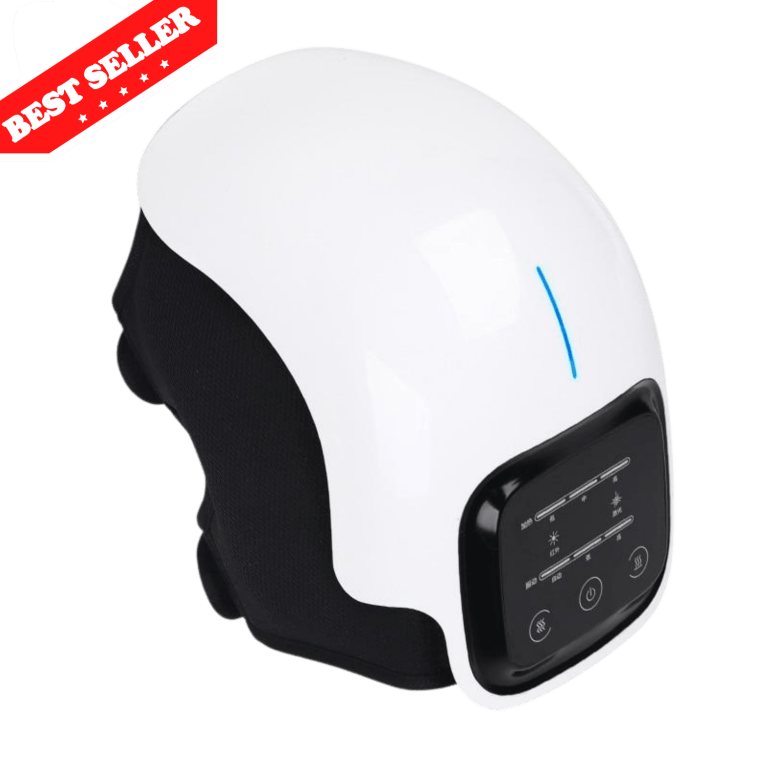
Three heat levels with overheating protection, air compression, vibration and red light. Ten minutes, then it switches itself off. Cordless, up to 2 hours per charge.
kr1,240.22See the knee massager
Safety for both
- Heat should feel comfortably warm, never hot. Start on the lowest level.
- Never fall asleep on a heating pad. Choose models with an automatic shut-off.
- Don’t use heat on broken, irritated or numb skin. If you have reduced feeling in your legs, ask your doctor first.
- Heat is usually suggested for stiffness, and cold for fresh swelling in the first day or two (WebMD). If the knee is swollen, red or hot, ask a doctor before using either.
Cost per evening
A $30 heating pad used every evening for a year costs less than 10 cents a night. A $120 knee massager used the same way costs about 33 cents a night in the first year, and less after. The question is not the price, it is whether you will use the massage. If you are unsure, buy where you can return it: MONKIKA massagers come with a 60-day home trial.
Questions
It does more: heat plus air compression and vibration, without a cable. It is not better if warmth is all you want, because a heating pad costs less.
No. Never fall asleep on a heating pad. Use one with an automatic shut-off and keep sessions short.
Some people find moist heat more soothing, which is why a warm damp towel or microwavable pack is often suggested. It is a matter of comfort; neither is a treatment.
Neither treats arthritis. Heat is listed among options for knee osteoarthritis in the American College of Rheumatology guideline, and both give heat. Ask your doctor what suits you.
There is no need, and stacking two heat sources raises the risk of burns. Use one at a time.
Warmth, and the massage too
Ten cordless minutes on the sofa, with 60 days to try it at home.
Sources
This guide is for general information. It is not medical advice. MONKIKA products are wellness devices for comfort and relaxation, not medical devices, and are not intended to diagnose, treat, cure or prevent any disease. If you have a medical condition, recent injury or surgery, ask a healthcare professional before using heat, cold, compression or massage.

