


Blog
Heavy, Tired Legs at the End of the Day: Why It Happens and What Helps
Nov
MEBy MONKIKA EL, founder of MONKIKA · Updated November 2026 · 7 min read
The short answer
Tired legs that feel heavy by evening usually come from long hours of standing or sitting still. Your calf muscles help push blood back up to the heart; when they barely move, blood and fluid collect in the lower legs, which can ache and swell a little. Moving every hour, walking, raising your legs and, if your doctor recommends them, compression stockings usually help. Heaviness that keeps coming back with swelling, visible veins or skin changes can be a vein problem called chronic venous insufficiency, and leg pain that starts when you walk and stops when you rest can be a sign of narrowed arteries: both deserve a doctor’s visit. One leg that is suddenly swollen, painful, warm or red needs urgent care.
You get home, sit down, and your legs feel like they are filled with sand. It is one of the most common complaints of people who work on their feet, of long-haul drivers and desk workers, and of many people over fifty. Most of the time the cause is ordinary and the fixes are simple. Sometimes it is a sign worth checking. Here is how to tell the difference.
Why do my legs feel heavy and tired?
Standing or sitting for hours. Cleveland Clinic lists “sitting or standing for long periods of time” among the risk factors for chronic venous insufficiency, a condition whose symptoms include achy or tired legs and “a full or heavy feeling” in the legs (Cleveland Clinic). Even without that condition, legs that stay still all day tend to feel heavy by evening.
Not moving enough. Walking makes the calf muscles squeeze the veins and push blood upward. A day with little walking leaves that pump idle.
Heat, long trips and the end of the day. Warm weather, a long flight or a long drive, and simply the end of a long day can all make swelling and heaviness more noticeable.
Other factors. Cleveland Clinic also lists varicose veins, a past blood clot, extra weight, pregnancy, smoking and age over 50 among the risk factors for venous insufficiency.
Tired legs: what you feel and what it may mean
| What you feel | What it often means | What to do |
|---|---|---|
| Heavy, achy legs by evening that ease overnight | Long hours standing or sitting | Move, walk, raise your legs |
| Heaviness with swollen ankles at the end of the day, visible veins, skin changes | Possible chronic venous insufficiency | See a doctor |
| Pain or cramping in the calf when you walk, which stops when you rest | Possible narrowed arteries (claudication) | See a doctor |
| One leg suddenly swollen, painful, warm or red | Possible blood clot | Urgent care, no massage |
What helps tired legs
Cleveland Clinic’s self-care advice for venous insufficiency is a good routine for anyone whose legs feel heavy (Cleveland Clinic):
- Raise your legs above the level of your heart, for 30 minutes or more, at least three times a day if you have a vein problem. Even ten minutes on the sofa with your feet on cushions feels good after work.
- Walk regularly. Moving the calves helps blood return to the heart.
- Move during long sitting or standing. Flex your feet and ankles, take a short walk, and do the same on long car or plane trips.
- Wear compression stockings if your doctor recommends them. Graduated stockings are tighter at the ankle; stockings that bunch up can make things worse.
- Keep a healthy weight and look after the skin of your lower legs.
Where a leg massager fits
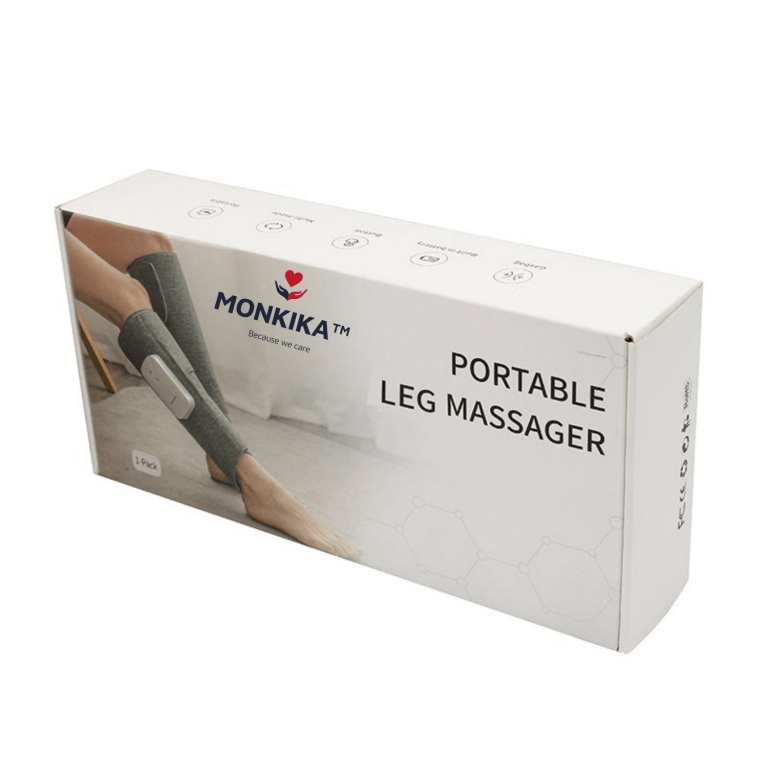
A leg massager is a comfort tool, not a treatment. It does not fix a vein or an artery problem. What it can do is turn “legs up for ten minutes” into a ritual you actually keep. Our MONKIKA Heated Leg Massager wraps the calf in warmth and rolling air compression for fifteen minutes with your feet up, then stops by itself. Pair it with heated foot wraps for the whole lower leg; we compare the options in foot and leg massager: 3 types compared.
From our shop
Sequential air compression with soothing heat around the calf. 3 modes, 3 intensities, stops by itself after 15 minutes, rechargeable.
kr1,023.16See the leg massager
From our shop
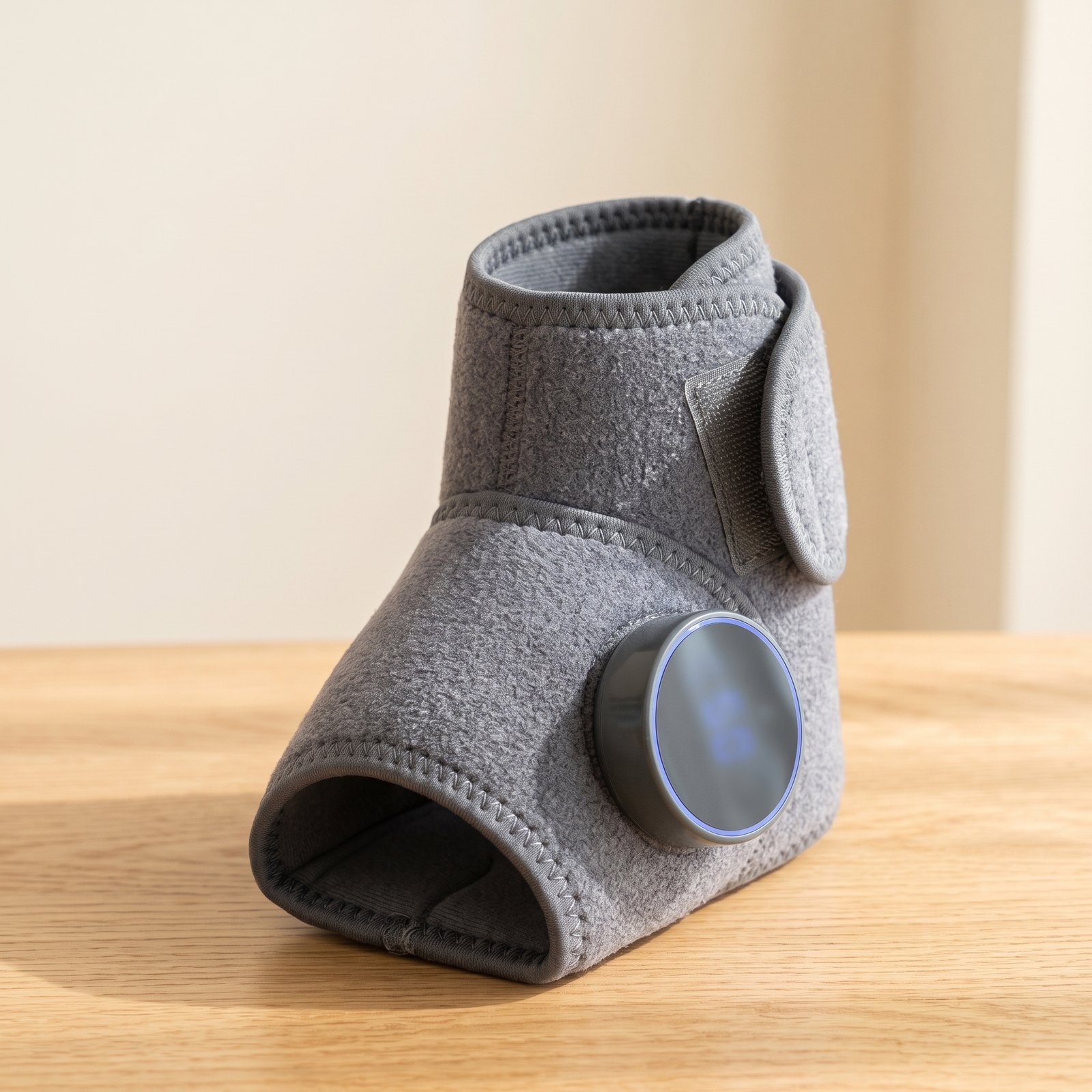
MONKIKA Heated Foot & Ankle Massager
Six heat levels from 104 to 149°F (40–65°C) and five vibration levels around the heel, arch and ankle. Cordless, one size.
kr362 or kr517 the pairSee the foot massager
When to see a doctor about heavy legs
Questions
Most often because of long hours standing or sitting still, which lets blood and fluid collect in the lower legs. If it happens most days with swelling, visible veins or skin changes, see a doctor to check for a vein problem.
Raise your legs above your heart on cushions, flex your ankles, and take a short walk when you can. Many people also enjoy warmth and gentle compression on the calves at the end of the day.
It can make your legs feel more comfortable and make it easier to keep a legs-up routine. It does not treat a vein or artery problem, so ask your doctor first if you have one.
Many people find them comfortable, and Cleveland Clinic lists compression stockings among the self-care steps for venous insufficiency, when a provider recommends them. Ask which compression level suits you.
Get urgent care if one leg is suddenly swollen, painful, warm or red. See a doctor if heaviness comes with swollen ankles most days, skin changes or sores, or if your calf hurts when you walk and eases when you rest.
Usually not: long days standing are the most common reason. Persistent symptoms, swelling or pain when walking deserve a check.
Legs up, ten warm minutes.
The Heated Leg Massager with a pair of foot wraps: kr1,539.96, shipped free, with a 60-day home trial.
Sources
This guide is for general information. It is not medical advice. MONKIKA products are wellness devices for comfort and relaxation, not medical devices, and are not intended to diagnose, treat, cure or prevent any disease. If you have a medical condition, recent injury or surgery, ask a healthcare professional before using heat, cold, compression or massage.

