


Blog
Cold Feet at Your Desk? 9 Ways to Keep Them Warm
Nov
YEBy MONKIKA El, founder of MONKIKA · Updated November 2026 · 6 min read
The short answer
Cold feet at your desk usually come from sitting still, close to a cold floor. To keep your feet warm at your desk, get up and move every 30 to 60 minutes, lift your feet off the cold floor with a footrest or a thick rug, wear wool socks and closed slippers, and add gentle heat if you still need it: a cordless heated foot wrap, or an under-desk warmer with an automatic shut-off. Feet that stay cold whatever you do, or that go numb, pale or painful, are worth showing to a doctor.
Why you get cold feet at your desk
- You sit still. Hours without moving mean less blood moving through your legs and feet, and the feet are the last in line for warmth.
- The floor is the coldest place in the room. Warm air rises and cool air settles, so your feet sit in the coldest layer of the room.
- The thermostat is set for the average person. OSHA recommends 68 to 76°F (20–24°C) for indoor workplaces, and the low end of that range feels cold when you don’t move for hours.
- Your body protects your core first. When you are cold, it keeps warmth in your chest and lets your hands and feet cool down.
9 ways to keep your feet warm at your desk
1. Move every 30 to 60 minutes
A walk to the printer, a glass of water, the stairs. Under the desk: calf raises and ankle circles. Cleveland Clinic suggests moving around and avoiding sitting all day, because even a short walk helps blood reach your feet.
2. Wool socks with room to breathe
Wool stays warm when slightly damp. A relaxed fit matters: socks that squeeze don’t help cold feet.
3. Closed slippers or indoor shoes
Working from home? Thin socks on tile or wood lose heat fast. A closed slipper with a thick sole does more than a second pair of socks.
4. Get your feet off the floor
A footrest, a box or a stack of books lifts your feet out of the coldest air in the room. Many people sit better with their feet supported, too.
5. A thick rug under the desk
Wool or faux fur between your feet and a cold floor. Cheap, quiet and it works every day.
6. Stop the draft
Check for cold air at floor level from a door, a window or a vent. A draft stopper, or moving the desk a little, can make a real difference.
7. Gentle heat that moves with you $61
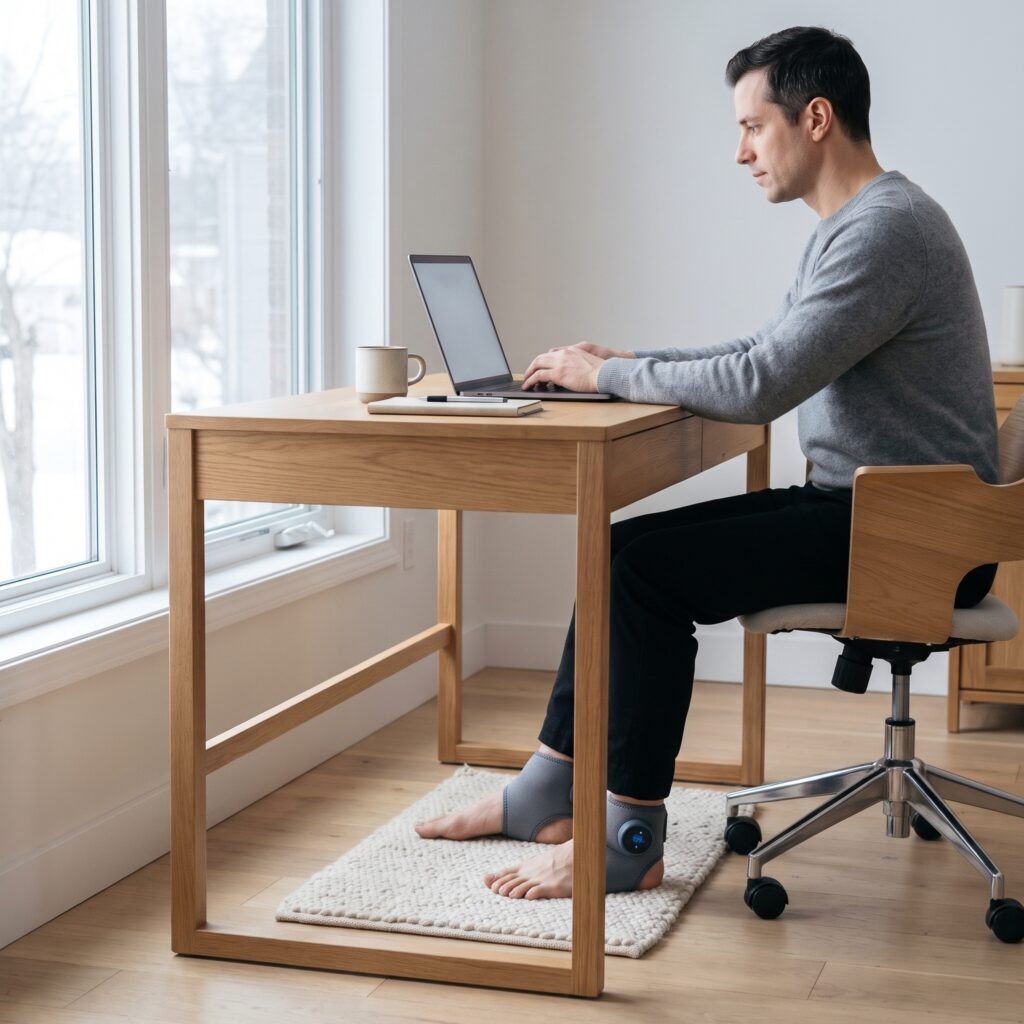
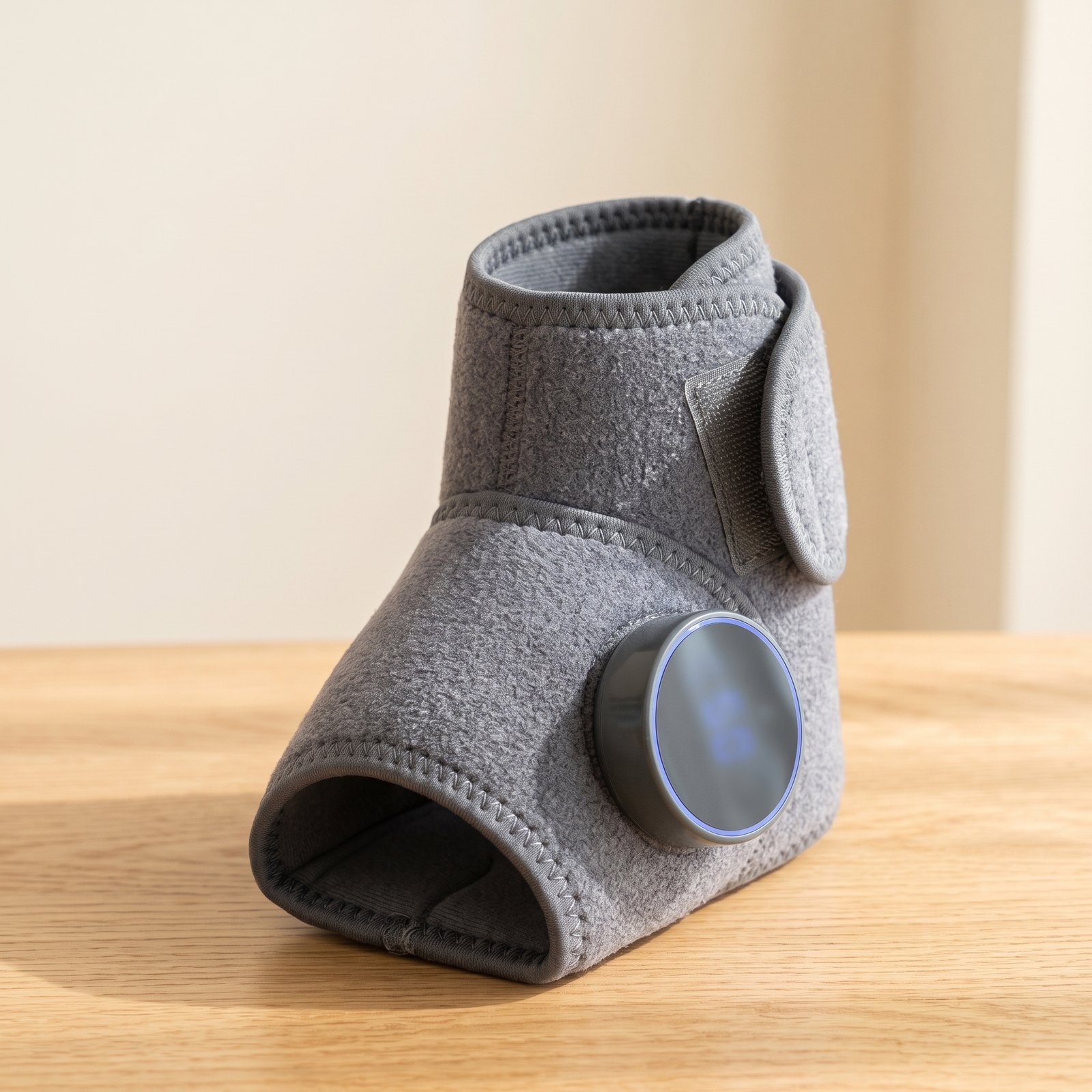
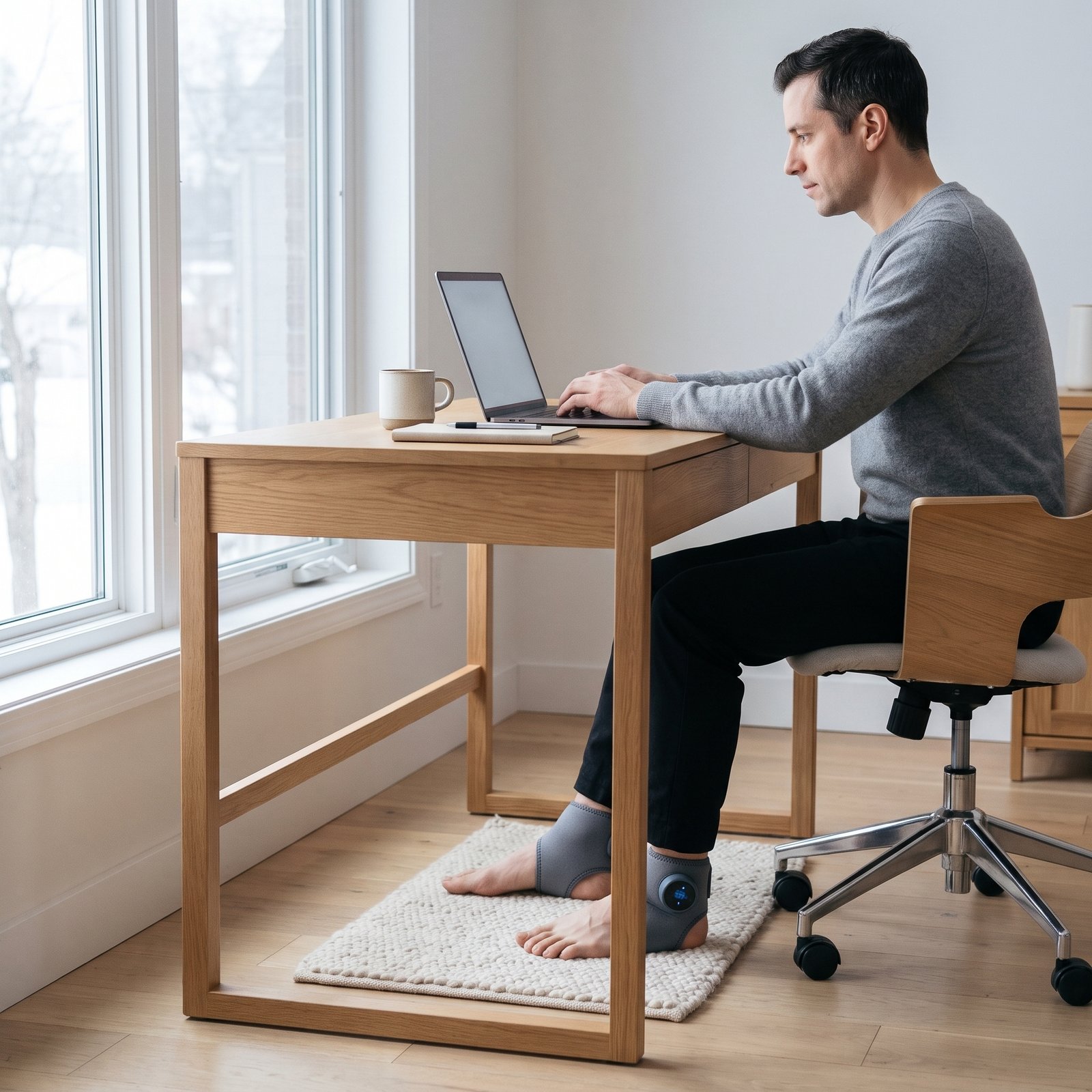
A cordless heated foot wrap warms the heel and ankle directly, with no cable to trip over. Ours, the MONKIKA Heated Foot & Ankle Massager, has six heat levels from 104 to 149°F (40–65°C) and five levels of gentle vibration. Use it in sessions of 15 to 20 minutes and start on the lowest level.
From our shop
MONKIKA Heated Foot & Ankle Massager
Six heat levels from 104 to 149°F (40–65°C), five vibration levels, cordless, one size with a hook-and-loop strap.
$61 or $87 the pairSee the foot massager
8. An under-desk heater, used carefully
A small heater or a heated foot mat warms the space around your feet. Choose one with tip-over protection and an automatic shut-off, keep it clear of paper and cables, and check your workplace rules first.
9. Keep your core warm
A warm layer on your body leaves more warmth for your hands and feet. A cardigan on the back of your chair is the cheapest foot warmer there is.
Which fix for which desk
| Fix | Cost | Best for | Watch out for |
|---|---|---|---|
| Moving every hour | Free | Everyone | Set a reminder |
| Wool socks and slippers | $15 to $60 | Home offices | A fit that doesn’t squeeze |
| Footrest or rug | $20 to $80 | Cold floors | Knees at a comfortable angle |
| Cordless heated foot wrap | $61 | Feet that need warmth now | Start low, never on numb feet |
| Under-desk heater or heated mat | $30 to $100 | Cold rooms | Tip-over protection, auto shut-off |
When cold feet need a doctor
More warm ideas: foot massager for tired feet after work and gifts for someone with cold feet.
Questions
Usually because you sit still for hours, close to a cold floor, in a room set for the average person. If your feet are cold everywhere and all the time, ask your doctor: poor blood flow and conditions such as anemia, hypothyroidism or Raynaud’s phenomenon can be causes.
OSHA recommends a range of 68 to 76°F (20–24°C) for indoor workplaces.
Yes for healthy feet, if you start on a low level, keep sessions to 15 to 20 minutes and take it off if your skin turns very red or tingles. Not on numb feet, and not with diabetes or neuropathy unless your doctor agrees.
Cleveland Clinic lists compression socks among the things that can help cold feet. Start with light compression, and ask your doctor first if you have a circulation problem.
A heater warms the air around your legs; a wrap warms the foot itself, with no cable. In a shared office, a wrap is usually easier to live with.
No cable. Six heat levels.
The MONKIKA Heated Foot & Ankle Massager, made for cold feet under the desk: $61, or $87 for the pair.
Sources
This guide is for general information. It is not medical advice. MONKIKA products are wellness devices for comfort and relaxation, not medical devices, and are not intended to diagnose, treat, cure or prevent any disease. If you have a medical condition, recent injury or surgery, ask a healthcare professional before using heat, cold, compression or massage.

