


Blog
Cold Feet at Night: Why Your Body Is Warm but Your Feet Are Cold
Nov
MEBy MONKIKA EL, founder of MONKIKA · Updated November 2026 · 6 min read
The short answer
Cold feet at night are common and usually harmless. Feet are the farthest point from your heart, have little muscle to make heat, and lose warmth quickly when you lie still in a cool bedroom, so your body can feel warm while your feet stay cold. Warm socks, warming your feet before bed and moving your ankles usually fix it. Warm feet may even help you sleep: in a small 2018 study, people wearing bed socks fell asleep 7.5 minutes faster. Feet that are cold all the time, or that turn numb, pale or blue, or hurt, deserve a doctor’s visit.
The duvet is up to your chin, your back is warm, and your feet feel like ice. Cold feet at night are one of the most common reasons people can’t fall asleep in winter. Here is why it happens, what usually helps, and when cold feet at night are worth checking.
Cold feet at night: why is my body warm but my feet are cold?
- Distance and little muscle. Feet are far from the heart and make little heat of their own, so they are the first to feel a cool room.
- Lying still. In bed you stop walking, and the calf and foot muscles that help move blood stop working.
- A cool bedroom and bare feet on a cold mattress.
- Blood flow. Cleveland Clinic names poor blood flow as the most common cause of cold feet, along with conditions such as anemia, hypothyroidism, peripheral artery disease and Raynaud’s phenomenon (Cleveland Clinic).
Warm feet and sleep: what the research says
Warm feet are not just comfortable. In a classic study published in Nature in 1999, widening of the blood vessels in the hands and feet, which lets them release heat, was the best predictor of how quickly people fell asleep (Nature, 1999). In a small 2018 study of six young men sleeping in a cool room, warming the feet with bed socks shortened the time to fall asleep by 7.5 minutes, added 32 minutes of sleep and reduced awakenings (Journal of Physiological Anthropology, 2018). Small studies, but a good reason to warm your feet before bed.
8 ways to warm cold feet at night in bed
- Bed socks. Loose, soft wool or cotton socks; avoid tight cuffs.
- Warm your feet before you get into bed, rather than heating them all night.
- A warm foot bath for a few minutes, then dry well between the toes.
- Move first: a few minutes of walking, calf raises or ankle circles before lying down.
- A blanket at the foot of the bed, folded over your feet.
- Warm the bed, not your skin: preheat with an electric blanket, then switch it off before you get in.
- Keep the bedroom comfortably cool, not cold, and keep feet off cold floors in the evening with slippers.
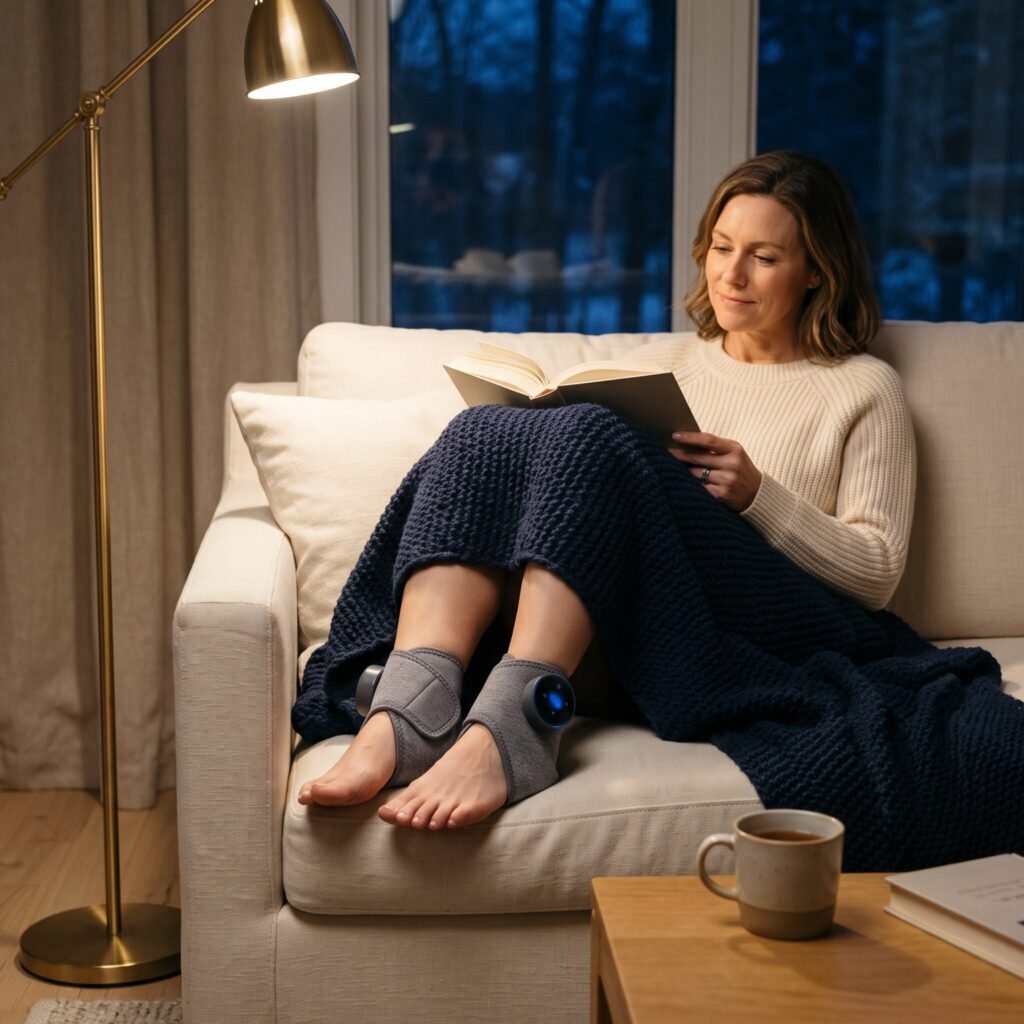
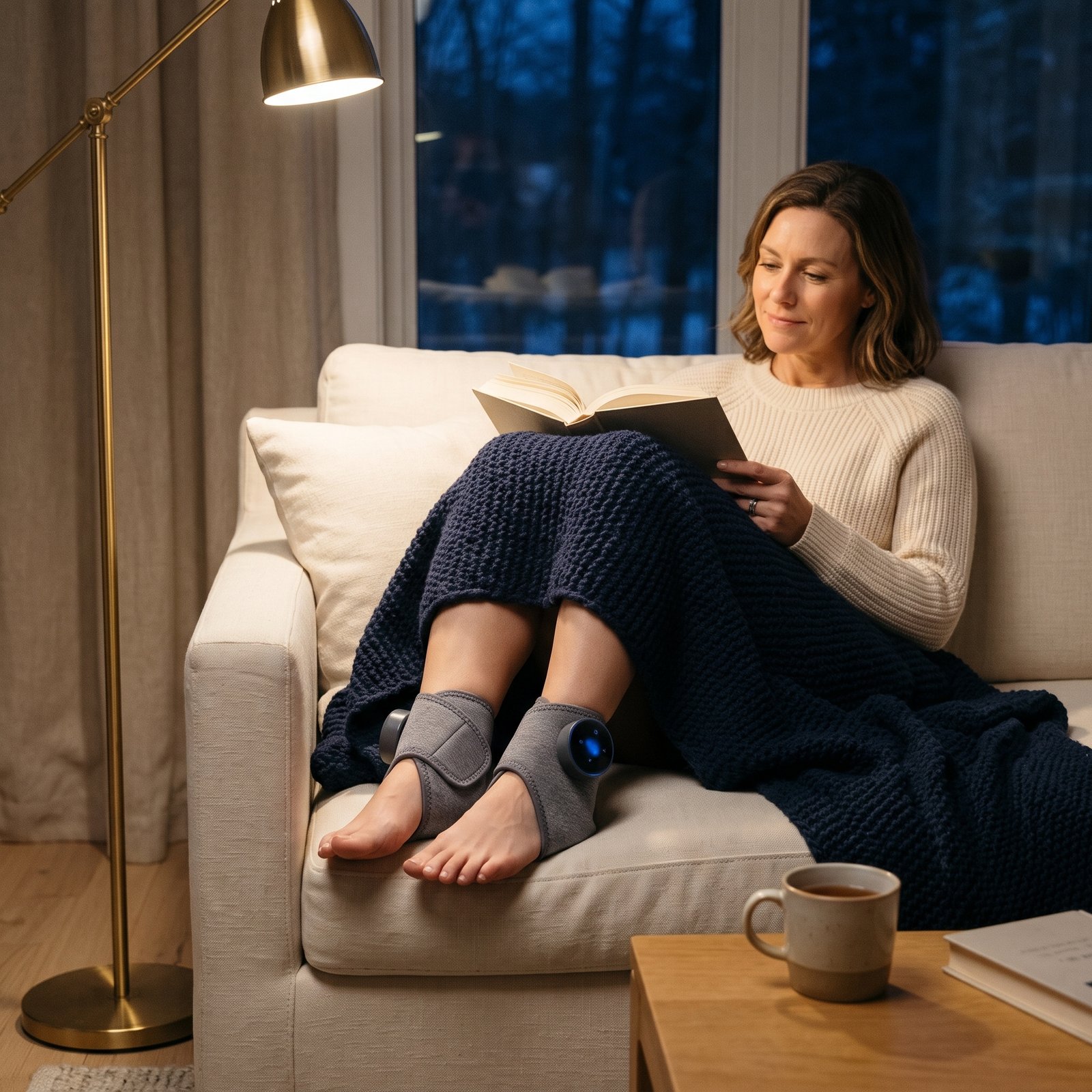
- Ten minutes of warmth on the sofa before bed with a heated foot wrap, then take it off.
From our shop
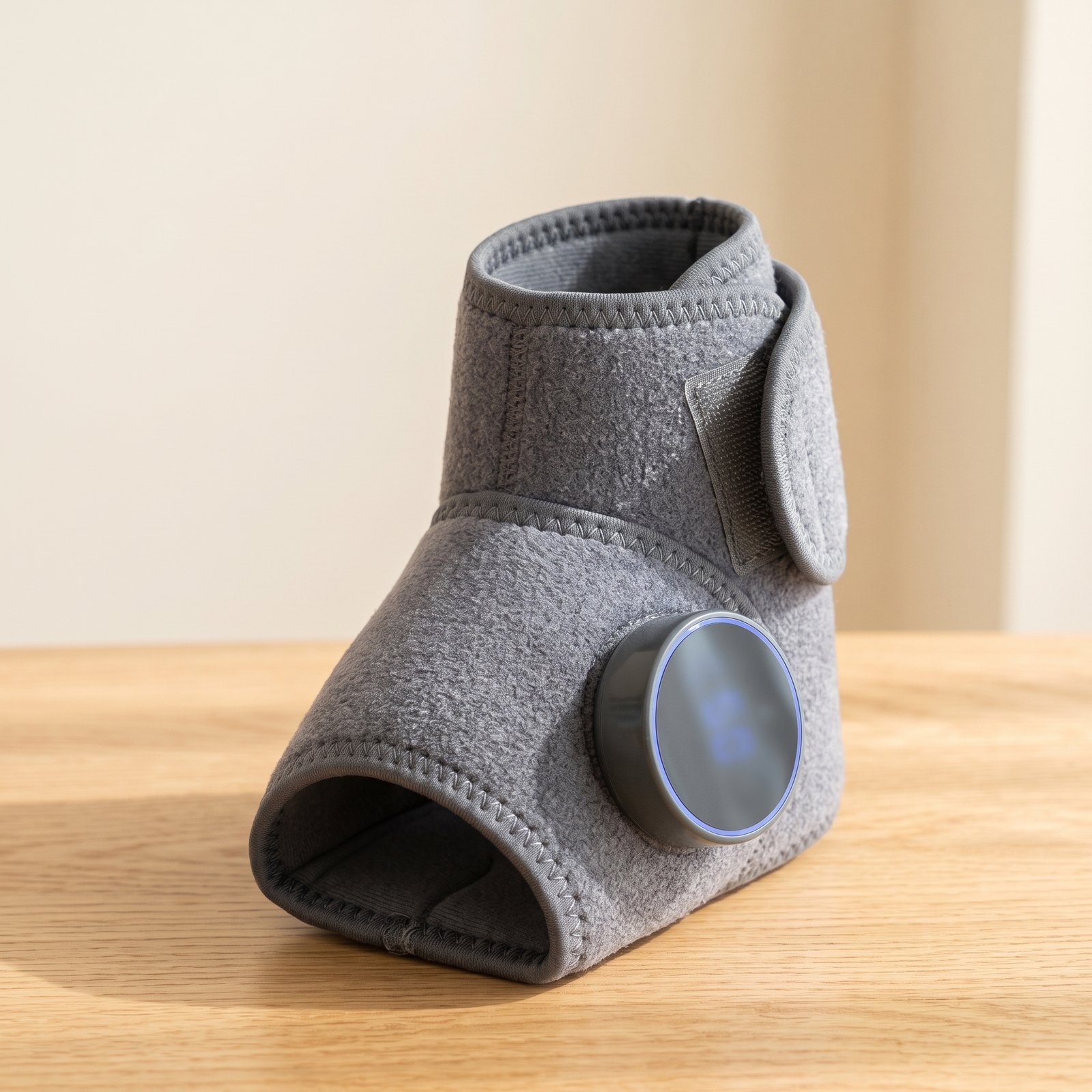
MONKIKA Heated Foot & Ankle Massager
Six heat levels from 104 to 149°F (40–65°C) and five vibration levels around the heel, arch and ankle. Cordless, one size.
$35 or $50 the pairSee the foot massager
Heat in bed: how to use it safely
When to see a doctor about cold feet
Questions
Feet are far from the heart, make little heat of their own and stop moving when you lie down, so they cool first. A cool room and bare feet make it worse. If it happens all the time, ask your doctor to check your circulation.
For most people, yes: soft, loose socks keep feet warm, and a small 2018 study found that bed socks helped people fall asleep faster and wake up less.
Warm them before you lie down: a few minutes of walking or ankle circles, a short warm foot bath, or ten minutes of gentle heat on the sofa, then soft socks.
We don’t recommend it. Warm your feet before bed and take any heating device off before you sleep. People with diabetes or reduced feeling in the feet should not use heat on their feet.
Usually not. But feet that are always cold, numb, pale or blue, or painful, deserve a doctor’s visit.
Yes, for someone without diabetes or numb feet. Ours is $35, or $50 for the pair. See also our gifts for someone with cold feet.
Warm feet before bed.
Heated foot wraps for a ten-minute warm-up on the sofa: $35, or $50 for the pair.
Sources
This guide is for general information. It is not medical advice. MONKIKA products are wellness devices for comfort and relaxation, not medical devices, and are not intended to diagnose, treat, cure or prevent any disease. If you have a medical condition, recent injury or surgery, ask a healthcare professional before using heat, cold, compression or massage.

