


Blog
Air Compression vs Vibration Knee Massager: What’s the Difference?

Nov
YEBy MONKIKA EL, founder of MONKIKA · Updated November 2026 · 6 min read
The short answer
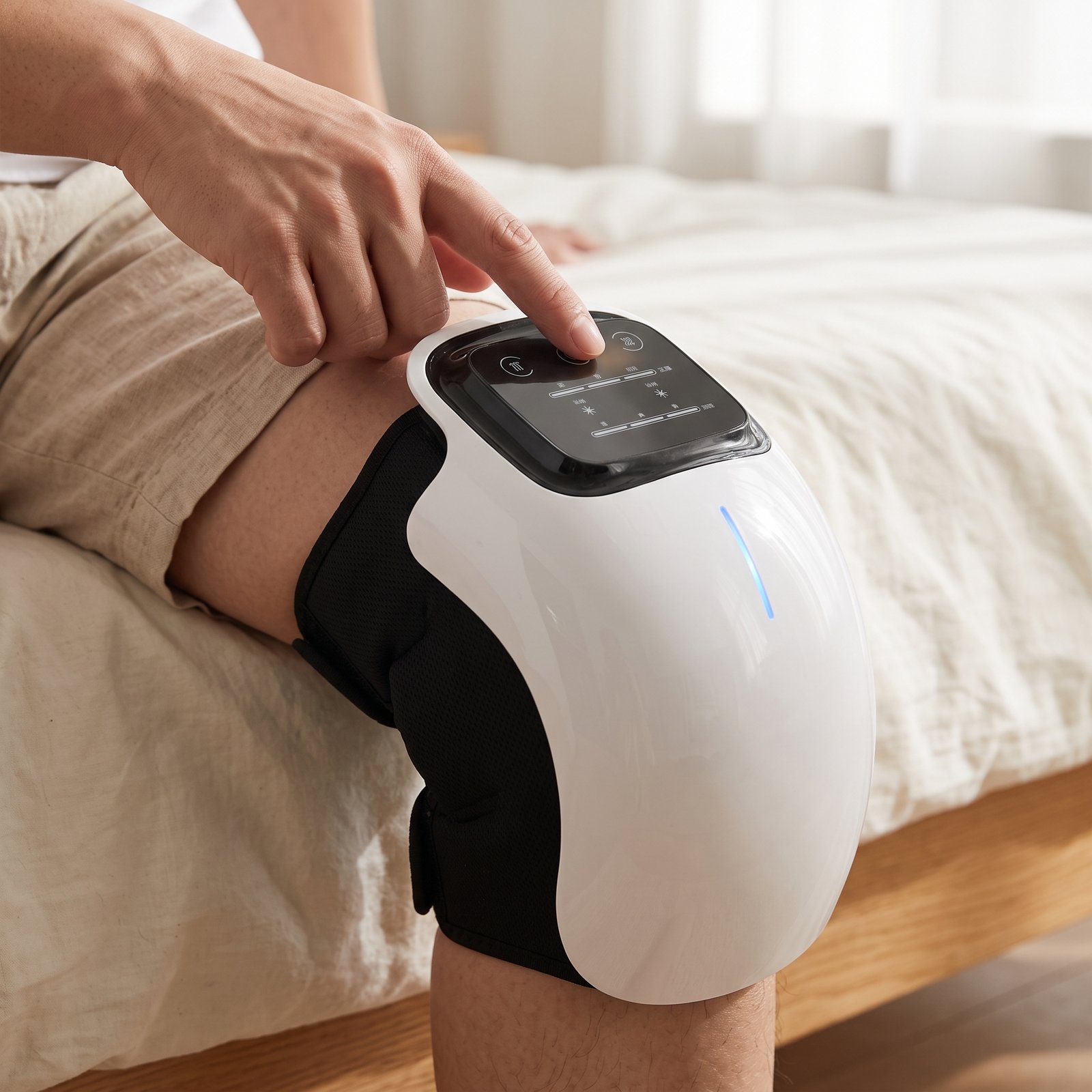
Air compression vs vibration knee massager, in short: an air compression model uses small airbags that fill and release around the joint, so it feels like a slow, kneading squeeze. A vibration model uses a small motor that hums against the knee, which feels lighter and more buzzing. Compression feels closer to a hands-on massage; vibration is gentler and more of a background sensation. Many models, including ours, combine both with heat.
Air compression vs vibration knee massager, side by side
| Air compression | Vibration | |
|---|---|---|
| How it works | Airbags inflate and deflate around the knee | A small motor vibrates against the knee |
| How it feels | A slow squeeze and release, like kneading | A light, even hum |
| Coverage | All around the joint | Mostly where the motor sits |
| Sound | A soft pump noise when the bags fill | A quiet buzz |
| Battery | The pump uses more power | Usually lighter on the battery |
| Best for | People who like firm, massage-like pressure | People who prefer a gentle, subtle sensation |
How air compression works
Inside the wrap, small air chambers are connected to a pump. The pump fills them in turn, holds, then releases, so the pressure moves around the knee in a rhythm. Intensity settings change how full the chambers get. It is the closest a wrap gets to the feel of hands kneading the joint.
How vibration works
A small motor, the same idea as in a phone, runs against the knee at one or several speeds. The feeling is lighter and more superficial than compression. Some people find it soothing; others barely notice it next to the heat.
Which one will you prefer
- You like a firm massage: air compression.
- Your knee is sensitive to pressure: vibration, or compression on its lowest setting.
- You mainly want warmth: either, as long as the heat is adjustable. Heat is the part of a knee massager with the most research behind it.
- You can’t decide: a combined model lets you use one, the other or both.
What to look for
- Adjustable intensity for both compression and vibration.
- Airbags that go all around the joint, not just the front.
- Heat with several levels and overheating protection.
- An automatic shut-off after 10 to 15 minutes.
- A strap that fits your knee snugly, and a battery that lasts a few sessions.
- A return window long enough to try it properly.
From our shop
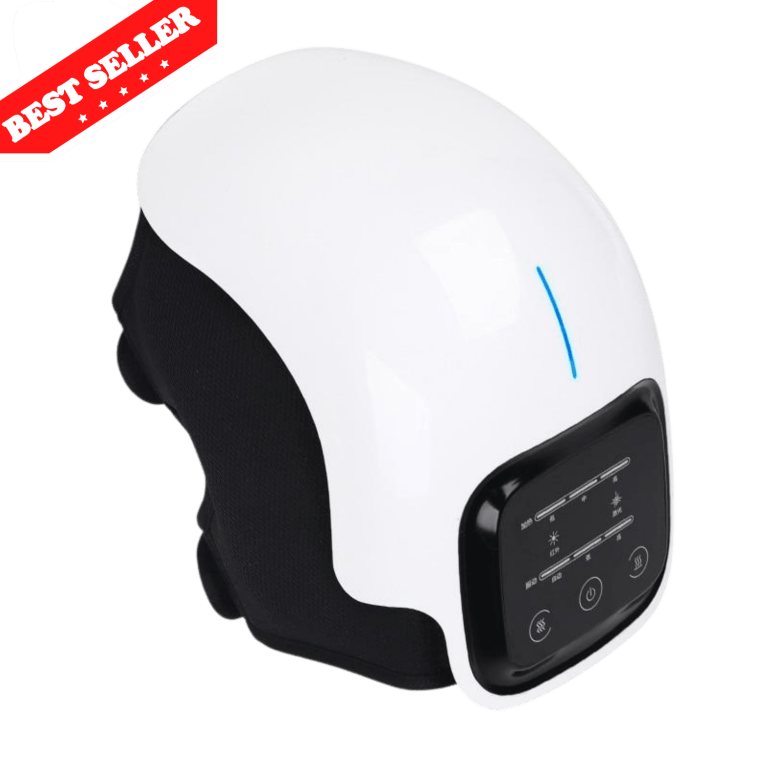
Air compression, vibration (low, high or automatic), three heat levels and red light, together or separately. Ten-minute sessions, cordless.
$119.99See the knee massager
Next: knee massager vs heating pad and heated vs hot and cold knee massager.
Questions
Many people find it relaxing and close to the feel of a hands-on massage. It is not a treatment. Start on the lowest pressure, and ask your doctor first if you have circulation problems or a history of blood clots.
Neither is a treatment, and there is little research on either in small home devices. Heat has more support. Choose the sensation you enjoy, and ask your doctor what suits your knees.
You will hear a soft pump when the airbags fill. It is quiet enough to watch TV.
On combined models, yes. Many people use the automatic mode, which mixes heat, compression and vibration.
The lowest. Move up one level at a time over a few sessions.
Compression, vibration and heat. Your choice.
One cordless wrap, ten minutes, 60 days to try it at home.
This guide is for general information. It is not medical advice. MONKIKA products are wellness devices for comfort and relaxation, not medical devices, and are not intended to diagnose, treat, cure or prevent any disease. If you have a medical condition, recent injury or surgery, ask a healthcare professional before using heat, cold, compression or massage.

