

Blog
Knee Brace vs Compression Sleeve: Which One Do You Need?
Nov
MEBy MONKIKA EL, founder of MONKIKA · Updated November 2026 · 6 min read
The short answer
Knee brace vs compression sleeve: a sleeve is a stretchy tube that gives snug compression, warmth and a feeling of support while the knee moves freely. A brace adds structure. Hinged braces limit side-to-side movement for unstable knees and after ligament injuries, unloader braces take pressure off the worn side of an arthritic knee, and straps or patellar braces work on the kneecap and its tendon. For mild aches and everyday activity, a sleeve is usually enough. If your knee gives way, was injured or has a specific diagnosis, ask your doctor or physical therapist which support you need.
Walk into a pharmacy and you will find a wall of knee supports: thin sleeves, braces with metal hinges, straps, wraps. They are not interchangeable. Here is what each one is for, so you buy the one your knee needs.
Knee brace vs compression sleeve: the 4 main types
| Type | What it does | Typically used for |
|---|---|---|
| Compression sleeve | Mild support and gentle compression around the joint | Mild pain, swelling, early arthritis, general activity |
| Hinged brace | Limits side-to-side movement to improve stability | Ligament injuries, a knee that buckles or gives out |
| Unloader brace | Reduces pressure on the damaged part of the joint | Arthritis on one side of the knee |
| Patellar brace or knee strap | Supports the kneecap, or reduces tension on its tendon | Runner’s knee, jumper’s knee, kneecap tracking problems |
These roles follow the guidance of an orthopaedic practice, which also stresses that braces don’t cure the underlying problem and work best alongside strengthening exercise and physical therapy (Centers for Advanced Orthopaedics).
Knee brace vs sleeve, side by side
| Compression sleeve | Hinged brace | |
|---|---|---|
| Support | Mild, even, all around | Firm, limits sideways movement |
| Movement | Full bending | Can be limited by the hinges |
| Under trousers | Slim | Bulky |
| Putting it on | Seconds, like a sock | Straps to adjust |
| All-day comfort | Usually easy | Heavier and warmer |
| Typical user | Walkers, runners, people on their feet | After an injury, on medical advice |
When a knee sleeve is enough
- Your knee aches mildly on walks, stairs or after a long day, but doesn’t give way.
- You want a warm, held feeling during running, gym sessions or hikes.
- Your doctor has told you a sleeve is fine for comfort with early arthritis.
- You need something invisible under work trousers.
A clinician at Wilmington Health puts it simply: sleeves suit mild to moderate pain and don’t give the same level of support as braces (Wilmington Health).
When you need a brace instead
- Your knee feels unstable, buckles or gives out: a hinged brace is often used, on medical advice.
- After a ligament injury, such as an ACL or MCL sprain: your surgeon or physical therapist chooses the brace.
- Arthritis mostly on one side of the knee: ask about an unloader brace.
- Pain at the front of the knee around the kneecap or just below it: ask about a patellar brace or strap.
Signs to see a doctor before choosing either
- Your knee gives way, locks or catches.
- It swelled quickly after a twist or a fall.
- You can’t straighten it fully or put weight on it.
- It is hot, red or the pain keeps getting worse.
A support can make you more comfortable while you wait for an appointment, but it shouldn’t replace one.
The MONKIKA knee compression sleeve
From our shop
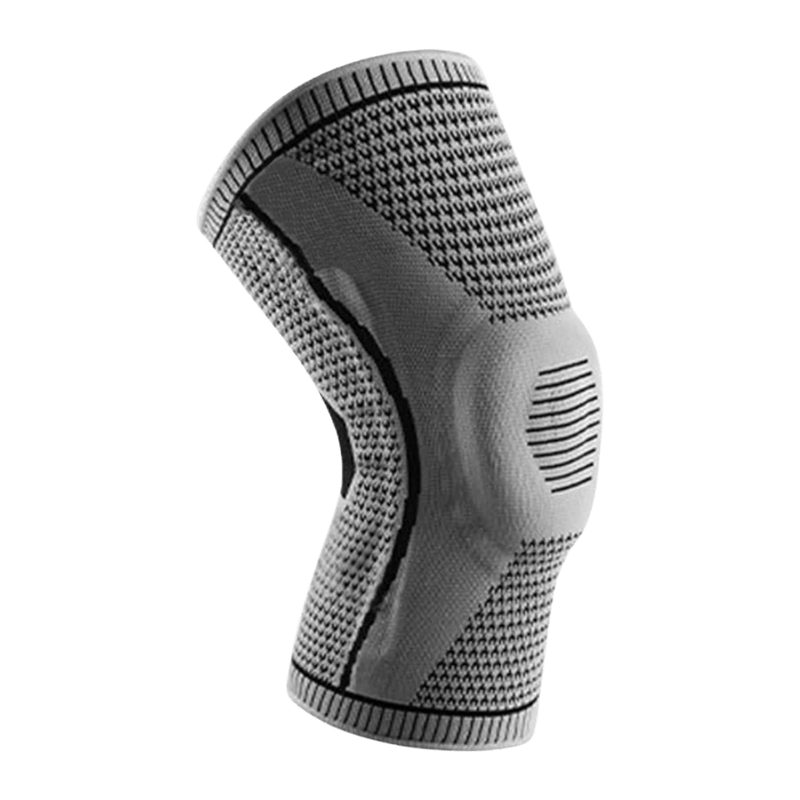
MONKIKA Knee Compression Sleeve
Snug, even compression with flexible side stabilizers, in a slim, breathable knit you can wear under trousers. Sizes M to XL, 4 colors, one sleeve per knee. Hand wash cold, air dry.
NZD $69.89 or NZD $122.33 the pairChoose my size
More on sleeves: what a knee compression sleeve does and how long you can wear one.
Questions
For comfort with mild or early arthritis, many people start with a sleeve. If the arthritis is mostly on one side of the knee, an unloader brace may be suggested. Ask your doctor which suits you.
Most runners without an injury choose a sleeve for a snug, warm feeling. Pain at the front of the knee may call for a strap; ask a physical therapist.
Ask your doctor or physical therapist. The right support depends on the tear, the treatment and whether the knee locks or gives way.
Only if your surgeon or physical therapist agrees. After a ligament injury, a hinged brace is often used, and the choice is theirs.
No. They add a little structure at the sides, but without hinges a sleeve doesn’t limit how the knee moves.
Many people wear one through the day and take it off at night. See how long you can wear a knee compression sleeve.
For everyday knees, a sleeve. For injured knees, a doctor first.
The MONKIKA Knee Compression Sleeve: snug compression and side stabilizers, 60 days to try it.
Sources
This guide is for general information. It is not medical advice. MONKIKA products are wellness devices for comfort and relaxation, not medical devices, and are not intended to diagnose, treat, cure or prevent any disease. If you have a medical condition, recent injury or surgery, ask a healthcare professional before using heat, cold, compression or massage.