


Blog
2D vs 3D vs 4D Massage Chair: What the Letters Really Mean
Nov
MEBy MONKIKA EL, founder of MONKIKA · Updated November 2026 · 6 min read
The short answer
In a 2D vs 3D vs 4D massage chair comparison, the letters describe how the massage rollers move. 2D rollers travel up and down your back and side to side, at a fixed depth. 3D adds a third direction: the rollers push in and out, so you can choose how deep they press. 4D adds timing: the rollers change speed within each stroke, slowing and speeding up like hands. Between 3D and 4D, the difference is mostly rhythm, not strength. More letters cost more; for comfort, fit, track length and how much pressure you like matter as much.
Massage chair listings are full of letters: 2D, 3D, 4D, S-track, SL-track. They sound like screen resolutions and they move the price by thousands of dollars. Here is what each one means, in plain words, and when it is worth paying for.
2D vs 3D vs 4D massage chair, side by side
| 2D | 3D | 4D | |
|---|---|---|---|
| Movement | Up, down, side to side | Same, plus in and out | Same as 3D, plus changing speed |
| Depth | Fixed | Adjustable | Adjustable |
| Rhythm | Steady | Steady | Varies within each stroke |
| Feels like | A steady, even rolling | Fingers pressing deeper | Closer to the rhythm of hands |
| Usually found | Entry-level chairs | Mid-range and up | Premium chairs |
3D vs 4D massage chair: what each one feels like
2D feels even and predictable. The intensity comes mostly from the airbags and from how you sit. Many people who are sensitive to pressure, or new to massage chairs, prefer it.
3D lets you choose the depth. Fans of a firm, deep-tissue massage notice the difference most, especially on the shoulders and between the shoulder blades.
4D keeps the 3D depth and changes the tempo inside each movement, slowing down on a knot and speeding up between them. Compared with 3D, it feels more natural to some people and makes little difference to others. Try one in a store if you can.
S-track, L-track and SL-track
The track is the path the rollers follow. An S-track follows the curve of your spine from the neck to the lower back. An L-track continues under the seat to the glutes and the back of the thighs. An SL-track combines both. A longer track reaches more of the body; it matters as much as the number of “D”s if your hips and hamstrings get tight.
Which one is for you
- Choose 2D if you prefer gentle pressure, want a lower price, or care most about warmth, airbags and recline.
- Choose 3D if you like a firm, deep massage and want to set how hard the rollers press.
- Choose 4D if you want the most hand-like rhythm and the budget allows it.
- Whatever you choose, check the height and weight limits first: rollers that miss your neck are the biggest disappointment of all.
Beyond the rollers: what else changes the massage
Airbags (how many and where), heat, foot rollers, zero gravity recline and the length of the track all change how a chair feels. According to one US manufacturer, 3D or 4D precision is one of the things that separates premium chairs, priced from about $5,000, from mid-range ones (Human Touch). We break down the price tiers in how much does a massage chair cost.
Where the MONKIKA Float sits
From our shop
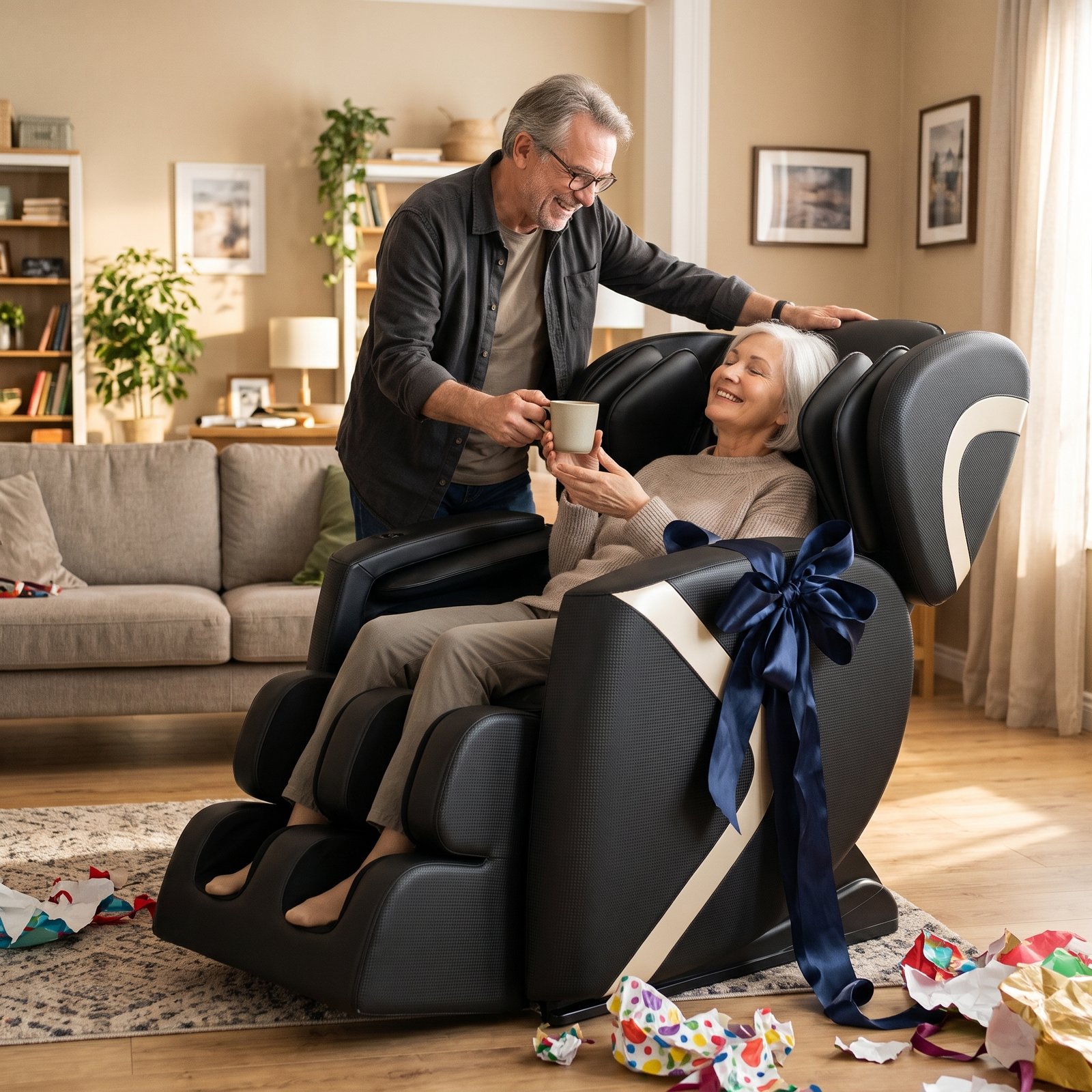
MONKIKA Float zero gravity massage chair
Zero gravity recline in 3 positions, 6 rollers from the neck to the lower back, airbags at the shoulders, arms, calves and feet, heat for the back and calves, foot rollers, Bluetooth. Fits 5’1″ to 6’0″ and up to 180 lb (81 kg).
kr12,893Check the fit guide
Questions
For people who use a chair daily and love a firm, hand-like massage, it can be. For gentle relaxation, many people are just as happy with 2D or 3D and a good recline.
Both let you set how deep the rollers press. A 4D chair also changes the speed of the rollers within each stroke, to imitate the rhythm of hands.
No. It gives a steady, even massage at a fixed depth. Many people who prefer gentle pressure choose it.
A chair whose rollers follow the curve of the spine (S) and continue under the seat to the glutes and thighs (L).
We found no good evidence that one roller type is better for back pain. If you have back pain, ask your doctor before using a massage chair and start on gentle settings.
Usually the gentlest one with simple controls: 2D or 3D on a low setting, an easy way to sit down and stand up, and height and weight limits that fit.
Fit first, letters second.
Check your height, weight and space in the Float fit guide before you compare letters.
Sources
This guide is for general information. It is not medical advice. MONKIKA products are wellness devices for comfort and relaxation, not medical devices, and are not intended to diagnose, treat, cure or prevent any disease. If you have a medical condition, recent injury or surgery, ask a healthcare professional before using heat, cold, compression or massage.

